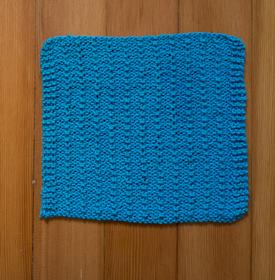
Monday, January 30, 2017

Free Pattern of the Week!

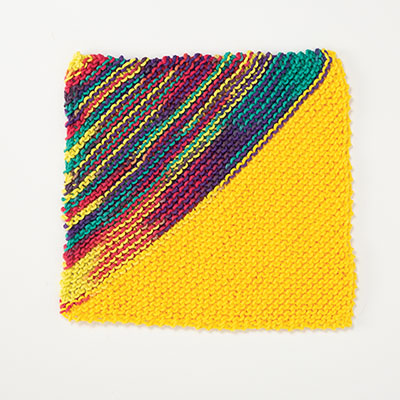
This weeks Free pattern is Slant Dishcloth from KnitPicks.Slant Dishcloth


Finished Measurements 10.5” square
Needles US 7 (4.5mm) straight or circular needles
Notions Yarn Needle
Gauge 18 sts x 16 rows = 4 inches garter stitch

Directions With MC, CO 1 stitch Set up rows
Row 1: kfb. (2 sts)
Rows 2: sl 1, kfb. (3 sts) Increase section
Row 3: Sl 1, k to last stitch, kfb.
Rows 4-63: Repeat Row 3 (64 sts) Decrease section
Row 64: attach CC , k all sts
Row 65: sl 1, k to last 2 stitches, k2tog Repeat row 65 until there are 2 sts left. k2tog, fasten off last st
Finishing Weave in ends, block if desired.

The Original Pattern can be found at
http://www.knitpicks.com/patterns/Slant_Dishcloth__D55552220.html

Thursday, January 26, 2017

Backcountry Travel in Winter

Backcountry Travel in Winter

Being an Outdoor Guide means that everyone asks you questions. Here are some tips and tricks that you can use!

Yearning to blaze your own trail across the snowy slopes that beckon from beyond the ski resorts? Backcountry travel is an increasingly popular way to explore new terrain.
This article gives a primer on the ways of enjoying winter adventures: telemark or randoneé skiing, snowshoeing, and snowboarding or splitboarding.
Understanding the Risks
In the backcountry, there's no lodge, no bar—and no lift line. You're skiing in an uncontrolled environment, whether it's out-of-bounds of a ski area, or in the wilderness. (Not sure where those boundaries lie? Do your homework before you go to make sure you're in compliance with local land-use restrictions.)
There's no ski patrol out there, either. In the backcountry, it's just you and your buddies, testing your know-how against nature. All the preparation, safety considerations and navigational planning for a day in the snow are up to you, so take these tasks seriously.
Topping the list of safety concerns is avalanches. These pose a very real and lethal danger to backcountry travelers. Before venturing out, it's essential that you get the education and skills to recognize—and avoid—these killers.
To get started, read the REI Expert Advice series of articles starting with Avalanche Basics, then seek training from avalanche experts. Your local REI store may offer such clinics during the winter season.
Backcountry Travel Methods
There are 4 primary modes of winter backcountry travel. Each skiing or boarding style equips you to ascend a slope under your own power and enjoy the thrill of the downhill as you rip your descent. Snowshoeing is a great complementary activity or offers easy-to-learn fun in its own right.
Telemark Skiing

"Free-heeled" telemark ski bindings allow your feet and ankles to flex free of the skis, whether you're climbing with skins (discussed below) or descending the steep terrain of the backcountry. Named for the Telemark region of Norway where it was developed, "tele skiing" is a challenging style that combines striding with a bent-knee technique for carving downhill turns.
Why do it?
  • It's fun: Telemark combines an element of "downhill thrill" with the go-anywhere flavor of free-heel skiing.
  • It's unique: Telemark is a cross-country style all its own. It can be a refreshing change of pace for skiers of all ability levels.
Randoneé Skiing
Also referred to as alpine touring (AT) and ski mountaineering, randoneé (which means "excursion" in French) has spiked in popularity in recent years. Randoneé ski gear combines the distinctive features of cross-country and alpine skis. The bindings convert from free-heeled (for touring and climbing) to a locked-down position for downhill runs. No need to learn a new turning technique—with randoneé gear, you can descend backcountry slopes with the same type of turns you learned at the downhill resort.
Why do it?
  • It's exciting: Randonneé skiing opens up an entirely new world of adventure to downhill skiers.
  • See more scenery: This style lets you cover more terrain than you can with snowshoes, and you can climb with greater efficiency than you can with telemark skis.
Snowshoeing
By itself, snowshoeing makes for an enjoyable backcountry outing, one that is especially suited to rolling terrain. The leader breaks the trail, making it an easier activity to do as a group.
Snowshoeing can also be part of a 2-step approach to backcountry travel. In this scenario, you put a board on your pack and strap on snowshoes to make an ascent. Snowshoe heel lifters (on some models) make climbing steep slopes easier. At the summit, simply swap gear to float gleefully down the powder.
Why do it?
  • It's easy: Snowshoeing is a fun, simple-to-learn winter sport. As the saying goes: "If you can walk, you can snowshoe."
  • Snowshoes are small, light and easy to pack. Plus, most snowboard boots or hiking boots will work just fine with snowshoes.
  • Versatility: You can snowshoe many trails that you can't ski due to trees or low-snow conditions.

Snowboards and Splitboards
As noted above, traditional snowboards can be paired with snowshoes to hike up the slopes and then ride back down.
An increasingly popular alternative are splitboards. These are modified snowboards that split into 2 free-heeled skis for a backcountry approach that bypasses the lifts. With skins (discussed below) on the bottom, they climb much like skis. Once you've reached your destination, simply reassemble the board and surf the power all the way back down. Sweet!
Why do it?
  • They're great in powder: The high flotation and single edge of a snowboard are arguably your best choice in powder conditions.
  • Splitboards are versatile: They have special, movable bindings that allow you to easily tour alongside your telemark and randoneé/alpine touring (AT) buddies.
What to Bring
Buddies: Traveling alone in the winter backcountry is a high-risk endeavor. Don't do it solo.
Climbing skins: Whether you travel the backcountry by ski or by splitboard, skins are a crucial piece of gear. Like a piece of carpeting, skins temporarily stick to the underside of a ski (or board) to provide the traction that greatly aids your climb up the backcountry slopes. See the REI Expert Advice article, Climbing Skins and Accessories, for details.
Avalanche safety gear: The must-have gear for each and every backcountry explorer in your group is an avalanche transceiver, snow shovel and probe. Equally important is knowing how to use this gear—practice before you go! Also consider the innovative safety gear options of avalanche airbags or Avalung packs. For details, see the REI Expert Advice article, Avalanche Safety Gear.
Proper clothing: Layering is the key to comfort when you're exerting in winter conditions. For details, see the REI Expert Advice article, Layering Basics.
The Ten Essentials: For a day in the backcountry, you need to carry—and know how to use—the Ten Essentials. This time-honored list of emergency and safety gear has evolved into the Ten Essentials systems. For details, see the REI Expert Advice article, The Ten Essentials.
Repair gear: Bring items that can help you repair your gear in the field. A few basics: screwdrivers, pliers, duct tape, bailing wire and rub-on ski wax.
Once armed with safety and navigational skills and outfitted with the proper gear, you're all set to explore the wide open spaces of the backcountry. Be safe, and have fun!

Article and others like it found at REI.com
Monday, January 23, 2017

Free Pattern of the Week!

This weeks Free pattern is Ribbon Candy Dishcloth from KnitPicks.Ribbon Candy Crocheted Dishcloth


Finished Measurements 9” square
Needles G/6 (4.25mm) crochet hook
Notions Yarn Needle
Gauge 15 sts x 15 rows = 4 inches

Notes: When changing colors, on the final stitch, when drawing through the last two loops, use the new yarn color. Then ch 1. This creates a cleaner change over.

Directions With MC, ch 35
Row1: Sc in 2nd chain from hook, sc in each chain. Ch1, turn (34 sc).
Rows 2 -3: Sc across. Ch1, turn.
Row 4: sc across. Change to CC, Ch1, turn. Ribbon stitch
Row5: * 1 sc, in next st, 1 dc. In next st. * repeat across ending with a dc. Ch1. Turn.
Row 6 *In the back loop only, 1 sc, in next st, 1 dc. In next st. * repeat across. Change to MC, Ch1, turn.
Row 7-8: Repeat Row 2.
Row 9: Repeat Row 4.
Repeat Rows 5 – 9 four more times. Repeat Rows 5-6. Repeat Row 2 four times. Fasten off. Finishing Weave in ends,

The Original Pattern can be found at
www.knitpicks.com

Thursday, January 19, 2017

Penny Pincher - Rejuvenating SecondHand Toys


You might be a parents looking to fill the toy box on a tight budget. The following are ideas on how to save money and be more environmentally aware. 

 - Toys with stickers tend to show their wear as they become ripped or soiled. Old stickers can be removed with rubber cement thinner or nail polish remover
 - Wash toys in warm water with soap. Use a small bristle brush like a tooth brush.
 - You can use sand paper or a nail file to scrap away rough spots.
 - Metal toys can be sanded and repainted. This works for bikes, wagons, and trucks. 


Hopefully these tips can help you fix up older toys and make your little one happy! 


Monday, January 16, 2017

Free Pattern of the Week!

This weeks Free pattern is Ice Crystal Face Cloth from KnitPicks.Ice Crystal Face Cloth


Finished Measurements 9.5” wide x 11” high
Needles US 6 (4.0mm) straight or circular needles, or size to obtain gauge
Notions Yarn Needle
Gauge 22 sts and 26 rows = 4” stockinette stitch

Notes: This washcloth features stranded color work. The cloth is fully charted with a stockinette color work center surrounded by a solid color garter stitch edge.

Directions

CO 51 stitches using long tail cast on using main color (MC).
Knit five rows in main color.

Work Chart

Odd rows: k5 MC, k sts as indicated on chart, k5 MC.

Even rows: k5 MC, p sts as indicated on chart, k5 MC.

After completing chart, knit five rows in main color.

Finishing Weave in ends, wash and block to size.


The Original Pattern can be found at
http://www.knitpicks.com/patterns/Ice_Crystal_Face_Cloth__D55801220.html

Thursday, January 12, 2017

Winter Camping Checklist

Winter Camping Checklist

Being an Outdoor Guide means that everyone asks you questions. Here are some tips and tricks that you can use!


The Ten Essentials

For safety, survival and basic comfort:

1. Navigation

  • Map (with protective case)
  • Compass
  • GPS (optional)

2. Sun protection

  • Sunscreen
  • Lip balm
  • Sunglasses

3. Insulation

  • Jacket, vest, pants, gloves, hat (see Clothing)

4. Illumination

  • Headlamp or flashlight (plus spare)
  • Extra batteries

5. First-aid supplies

  • First-aid kit

6. Fire

  • Matches or lighter
  • Waterproof container
  • Fire starter (for emergency survival fire)

7. Repair kit and tools

  • Knife or multi-tool
  • Kits for stove, mattress; duct tape strips

8. Nutrition

  • Extra day's supply of food

9. Hydration

  • Water bottles or hydration system (insulated)
  • Water filter or other treatment system

10. Emergency shelter

  • Tent, tarp, bivy or reflective blanket

Beyond the Ten Essentials

  • Backpack
  • Daypack or summit pack
  • 4-season tent or tarp or bivy sack
  • Snow or tent stakes and guylines
  • Tent-pole repair sleeve
  • Footprint (if needed for tent)
  • Sleeping bag (liner optional)
  • Stuff sack or compression sack
  • 2 sleeping pads per person (+ optional chair kit)
  • Pillow or stuffable pillowcase
  • Packable lantern
  • Snowshoes
  • Skis (with skins)
  • Crampons
  • Ice axe
  • Trekking poles (with snow baskets)
  • Multifunction watch with altimeter
  • Signaling mirror (often on compass)
  • Whistle
  • Personal locator beacon (PLB)
  • Avalanche transceiver (1 per person)
  • Avalanche probe (1 per person)
  • Snow shovel (1 per person)
  • Energy beverages or drink mixes
  • Slope meter
  • Snow saw
  • Meals
  • Energy food (bars, gels, chews, trail mix)
  • Stove
  • Fuel
  • Cookset with large pot (for melting snow)
  • Dishes or bowls
  • Utensils
  • Cups (measuring cups)
  • Pot grabber
  • Food-storage sacks or canister
  • 50' nylon cord
  • Backup water treatment (e.g., halogens)

Clothing

  • Base layer: wicking underwear
  • Mid layer: insulating jacket/vest/pants
  • Shell: rain jacket (or soft-shell jacket)
  • Rain pants (or soft-shell pants)
  • Dry clothing for camp
  • Insulating hat, cap or headband
  • Balaclava and/or face mask
  • Goggles
  • Gloves and/or mittens
  • Waterproof overmitts

Footwear; Assorted Personal Items

  • Boots
  • Main socks, liner socks, spare socks
  • Gaiters
  • Camp booties
  • Bandana or Buff
  • Hand warmers
  • Toilet paper + sanitation trowel
  • Hand sanitizer + quick-dry towel
  • Toothbrush and/or toiletry kit
  • Notebook and pen or pencil
  • Permits
  • Guidebook; interpretive field guide(s)
  • Camera
  • Binoculars
  • Two-way radios
  • Cell or satellite phone
  • Music player with headphones
  • Small amount of cash or credit card
  • Trip itinerary left with friend + under car seat

Article and others like it found at REI.com

Monday, January 9, 2017

Free Pattern of the Week!

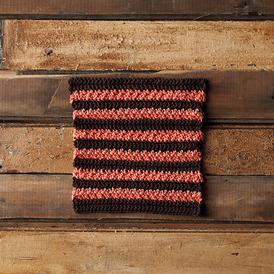
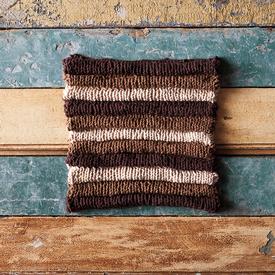
This week's free pattern is the Triple Chocolate Dishcloth from KnitPicks.comTriple Chocolate Dishcloth


Finished Measurements - 8.5” x 9” blocked
Needles - US 7 (4.50mm) straight or circular needles, or size to obtain gauge; US 6 (4.00mm): circular needles (for final row & bind off)
Notions - Yarn Needle, Stitch Markers
Gauge - 13.5 sts in stockinette and 4.5 pleats = 4”


Notes
The texture of this dishcloth is unique and fun! A great project to practice a slip stitch technique. The bind off is a unique slip stitch bind off and is important to use circular needles for this technique. Pattern adapted from 400 Knitting Stitches by Potter Craft.

Directions

With A and larger needles. CO 51 sts

Set rows

Row 1 (RS): K1, *k1,p1*; repeat from * to * to last 2 st. K2.

Row 2: K1, *p1,k1*; repeat from * to * to last st. K1.

Pleat Rows

Rows 3, 5, 7, 9: K1, *k1, slip 1 purlwise (yarn in front); * repeat from * to * to last 2 stitches. K2.

Rows 4, 6, 7, 10: K1, *p1, slip 1 purlwise (yarn in back); repeat from * to * to last stitch. K1.

Repeat these 10 rows (10) times

After each row 10 is finished, change color and begin with Row 1.

Stripe color order: A, B, C, A, B, C ,B, A, C, B, A

Last row: Change to smaller needles, knit across. Slide stitches back to other end of the circular needle (so the working yarn is at the end of the row.)

Bind off
For a good snug bind off do a slip st without knitting: Slip the first two sts to the right needle. Slip first st over the 2nd st and slip off the needle, one st left on right needle. *Slip next st from left needle to right needle, slip 1st st over the last st and off the needle. *Repeat across. Tie off the last st with working yarn.

Finishing
Weave in ends and block if desired


The original patter can be found at http://www.knitpicks.com/patterns/Triple_Chocolate_Dishcloth__D55559220.html

Thursday, January 5, 2017

How to Accomplish Your New Year's Resolutions

How to Accomplish Your New Year's Resolutions

New Year’s resolutions are goals or promises that people make for the New Year holiday to try to make their upcoming year better. Many find it difficult to maintain & accomplish their resolutions. Here is a list of things you can do to help make sure you accomplish the goals you set for the New Year.


1.      Brainstorm about changes & improvements you'd like to make. These can be about anything, not just the big ones like quitting smoking & losing weight that many people associate with New Year's resolutions. Jot down some notes while doing the following:
·         Consider how you can improve your health, your relationships with others, your work life, and your work life.
2.      Choose one or two attainable larger goals. Look over your notes & determine what items on it are most important to you.
3.      Create “systems.” Systems are the ways that you carry out a larger goal. You need to break down large goals into smaller actions that can are easier to carry out. If you leave your larger goals too vague, you may get confused & change your mind frequently on the ways to accomplish them.
4.      Talk to others about your goals. Discuss your goals & why you made them with your family & friends.
·         Ask for others’ support on these goals throughout the year. If possible, team up & visit the gym or ask them to speak up if you slip.
·         People who tell others about their goals are more likely to accomplish them, because they have extra support they need, or because they’re afraid of being embarrassed if they don’t accomplish them.
5.      Create a schedule. Even more important than a specific deadline for your goals is to set a schedule of how you will reach the goal
6.      Start following your plan immediately. Don't wait for inspiration to strike. The best thing to do is start on January 1st & start tracking your progress.
·         If your goal is to lose weight, don’t say, “I’ll start tomorrow.” Start right away!
7.      Create accountability. Find someone who has the same resolution. If you have a friend who’s also trying to lose weight, check in with each other & motivate each other.
8.      Remind yourself about your goals. For every day on your calendar or schedule, write down what you will do for that day, what time you will do it, & don't forget to actually do it, no matter how busy you are
9.      Create your environment so that you will accomplish your goals. It’s also good to get rid of habits that don’t coincide with your goals & may contribute to you being unable to reach them

·         For example, set your running shoes next to the door. Put fruits & veggies in the front of the fridge. Get rid of the junk food & don’t buy more.

Monday, January 2, 2017

Free Pattern of the Week!

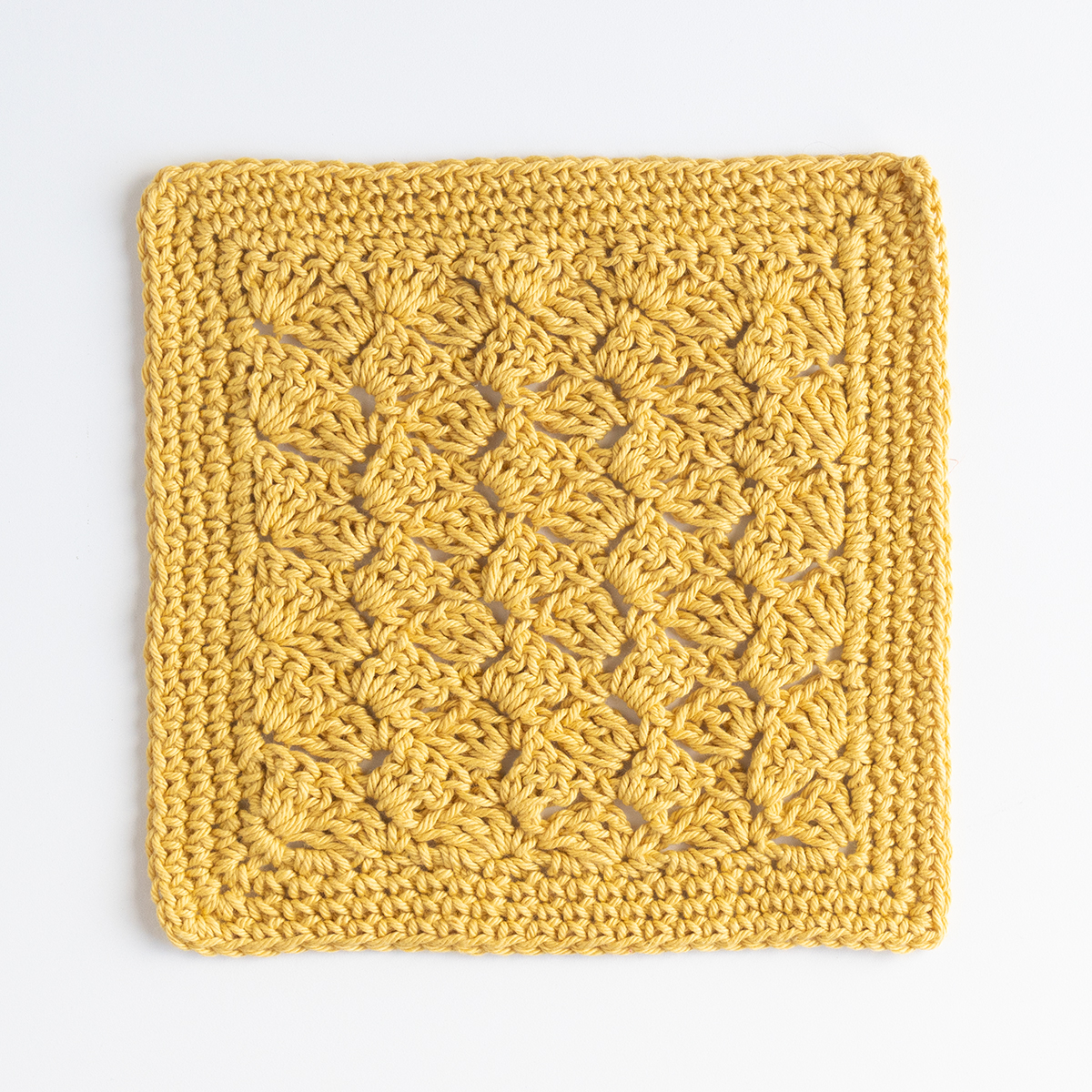
This week's free pattern is a Custard Pie Dishcloth by KnitPicks.com.Custard Pie Crochet Dishcloth


Finished Measurements - 8.25’ x 8.25’”
Hook - US J (6mm): crochet hook
Notions - Yarn Needle
Gauge - 4 shells = 4” (gauge is not critical)

Notes: This easy shell stitch center creates a delectable, textured effect, snugly framed by a chunky single crochet border.

Directions

Ch 22 (or a multiple of 3+1)

Row 1: 3 double crochet in 4th stitch from hook. Skip next 3 stitches, single crochet in 4th stitch. *Chain 3. Make three 3 double crochet in that same single crochet stitch. Skip the next 3 stitches, single crochet in the next stitch. Repeat from * to the end of the row. End with a single crochet.

Row 2:
Chain 3 and turn. Make 3 double crochet in the single crochet of the previous row. Single crochet in the next chain 3 space (You’ll find it on the opposite side of the next double crochet cluster of the previous row) *Chain 3, make 3 double crochet in the same chain 3 space. Single crochet in the next chain 3 space. Repeat from * across the row. End with a single crochet in the last chain 3 space.

Repeat Row 2 7 times or until the desired size of your dishcloth!

Final row: Turn, chain 2. *3 double crochets in the single crochet stitch from previous row (same stitch you just chained up from). Single crochet in the next chain 3 space. 3 double crochet in the hole connecting the 3 chain that you just single crocheted into and the previous cluster of double crochets. Continue from * until you end with a single crochet.

Border
Turn, chain 1. Single crochet evenly around the border, making sure to do 2 single crochets in each corner. Repeat for 3 rows or until desired size of border.

Finishing
Fasten off last stitch, weave in ends. beg beginning, blp single or double crochet in back, loop only, bpdc back post double crochet


The original pattern can be found at http://www.knitpicks.com/patterns/Custard_Pie_Crochet_Dishcloth__D55588220.html

Thursday, December 29, 2016

Water Bottle and Reservoir Care

Water Bottle and Reservoir Care


Being an Outdoor Guide means that everyone asks you how to fix their stuff. Here are some tips and tricks that you can use!

Over time, reusable plastic water bottles occasionally develop unpleasant odors and/or tastes. This typically occurs when bottles are stored incorrectly or cleaned infrequently.
Most rigid water bottles are made out of either polyethylene plastic (which tends to be cloudy in appearance) polypropylene (which comes in medium to dark colors) or copolyester (which can be clear, frosted or colored). Most hydration system reservoirs have polyethylene linings, which retain tastes and odors more easily than polycarbonate. But all plastic bottles can develop unwanted tastes or odors if cared for incorrectly.

General Care

The best way to maintain any plastic water bottle or bladder bag is to rinse it out after each use and to let it air dry completely. Most odor and taste problems occur when bottles are stored in wet areas or kept sealed for long periods of time with liquid inside. Polyethylene bottles can also develop unpleasant tastes/odors when they're used to store a variety of acidic juices.

Cleaning

If your water bottle develops a funky taste or odor, try the following procedure:
  • Put a teaspoon of bleach and a teaspoon of baking soda in the bottle and fill it with water.
  • Let the bottle sit overnight.
  • Rinse out the bottle completely the next day (or run it through the dishwasher).
  • Let the bottle air dry completely.
When cleaning hydration reservoirs, rinse them thoroughly and let them completely air dry before using them again. Do not place in your dishwasher.

Tip: Some tastes and odors can be removed from plastic water bottles simply by rinsing them with anti-bacterial mouthwash.

Article and others like it found at REI.com

Monday, December 26, 2016

Free Pattern of the Week

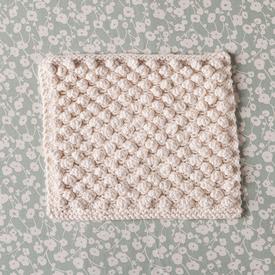
This week's free pattern is a Snowbobbles Dishcloth from Kintpicks.com


Snowbobbles Dishcloth

Finished Measurements - 8” long x 8” wide.
Needles - US 6 (4mm) straight or circular needles, or size to obtain gauge
Notions - Yarn Needle
Gauge - 19 sts and 21 rows = 4” in garter stitch.

Notes:
The Snowbobbles Dishcloth pattern uses a 5-stitch garter bobble to create an knobbily bobble that alternates to create a nestled bobble textured fabric that makes a great scrubby surface.

Make Bobble (MB)
Into the stitch where the bobble will be, k1*yo,k1* 2 times. There will now be five sts where there was one. Turn. Knit 5 sts. Turn. K2tog, place stitch just worked back onto left hand needle, pass
the remaining 3 sts over the st just worked, one at a time. K1.

Directions

Top Border
CO 39 sts
Work 3 rows in garter stitch

Begin Bobble Repeat
Row 1: K3 sts *MB, k3* until 4 sts rem, MB,k3.
Row 2: Knit all sts.
Row 3: K5 sts, *MB, k3* until 2 sts rem, k2.
Row 4: Knit all sts.
Repeat these last 4 rows until the piece measures 7.25 inches
from the cast on row.

Bottom Border
Work 3 rows in garter stitch.
BO all stitches.

Finishing
Weave in ends, wash and block to dimensions.

The original pattern can be found at http://www.knitpicks.com/patterns/Snowbobbles_Dishcloth__D55800220.html

Thursday, December 22, 2016

'Twas the night before Christmas

'Twas the night before Christmas
and all through the town
Not a sign of Baby Jesus
was anywhere to be found.

The people were all busy
with Christmas time chores
Like decorating, and baking,
and shopping in stores.

No one sang
"Away in a manger, no crib for a bed."
Instead, they sang of Santa
dressed-up in bright red.

Mama watched Martha Stewart,
Papa drank (root)beer from a tap.
As hour upon hour
the presents they'd wrap

When what from the T.V.
did they suddenly hear?
'Cept an ad.. which told
of a big sale at Sears.

So away to the mall
they all flew like a flash...
Buying things on credit..
and others with cash!

And, as they made their way home
From their trip to the mall,
Did they think about Jesus?
Oh, no... not at all.

Their lives were so busy
with their Christmas time things
No time to remember
Christ Jesus, the King.

There were presents to wrap
and cookies to bake.
How could they stop and remember
who died for their sake?

To pray to the Savior...
they had no time to stop.
Because they needed more time
to "Shop til they dropped!"

On Wal-mart! On K-mart!
On Target! On Penney's!
On Hallmark! On Zales!
A quick lunch at Denny's

From the big stores downtown
to the stores at the mall
They would dash away, dash away,
and visit them all!

And up on the roof,
there arose such a clatter
As grandpa hung icicle lights
up on his brand new step ladder.

He hung lights that would flash.
He hung lights that would twirl.
they never once prayed to Jesus...
Light of the World.

Christ's eyes... how they twinkle!
Christ's Spirit... how merry!
Christ's love... how enormous!
All our burdens... He'll carry!

So instead of being busy,
overworked, and uptight
Let's put Christ back in CHRISTmas
and enjoy some good nights!

Merry Christmas,
To all my friends and family!


Monday, December 19, 2016

Free Pattern of the Week

This week's free pattern is a Reversible Pips Washcloth from Knitpicks.comReversible Pips Dishcloth


Finished Measurements - 9” wide, 8” high
Needles - US 6 (4.00mm) 24” circular needle.
Notions - Yarn needle, Stitch Marker
Gauge - 17 sts x 27 rows = 4” on US 6 needles in pattern.


Notes:
The garter bumps on one side and knit ridges on the other make this a great reversible dishcloth with plenty of scrubbing power. This is also a great beginner pattern, all you need to know is how to knit and purl, cast on and bind off. With only two rows to memorize, you’ll have a whole pile of these dishcloths done, ready to tackle your dishes in a snap!

Directions

CO 41 sts.

Row 1 (RS): K3 sts, (P2, K1) repeat parenthesis across until the last 2 sts, K2.

Row 2 (WS): K across.

Repeat rows 1 & 2 until piece measures 8” or desired height, ending with a RS row.

Next row, BO.

Finishing-  Weave in all ends and block to measurements.

The Original pattern can be found at http://www.knitpicks.com/patterns/Reversible_Pips_Dishcloth__D55549220.html

Thursday, December 15, 2016

Hiking Boot Care

Hiking Boot Care

Being an Outdoor Guide means that everyone asks you how to fix their stuff. Here are some tips and tricks that you can use!

Here are 4 good habits to adopt:
  • Clean boots after every hike. A brush and some water are the basic tools.
  • Remove insoles/inserts after a hike to permit the whole boot to dry.
  • Do not expose boots to excessive heat; store them at room temperature.
  • When water stops beading on boot uppers, add a waterproofing treatment to restore their water resistance.
Read on for details on how to ensure that your boots enjoy a long life and perform at their best.

When Hiking Boots Are New

  • Keep the care instructions provided. Always follow the boot maker's maintenance advice.
  • New hiking boots rarely require treatment out of the box. Reason: Nearly all boots are factory-treated with a durable water repellent (DWR) finish.
  • Break in new hiking boots before attempting an extended trip.
  • If a flex point of a leather boot is slow to break in, apply conditioner to that spot to make it more pliable.

After Any Hike: Clean Those Boots

Cleaning Tips

Be diligent in cleaning hiking boots. You say you're too tired after a hike to clean your boots? Then clean 'em the following day.
Why bother?
  • With every flexing motion, particles of dirt, grit or sand can creep deeper into a boot's leather or fabric upper and grind away like sandpaper.
  • Mud can suck moisture from leather as it dries, leaving leather less pliable and vulnerable to accelerated aging.
  • Removable sock liners (found in some boots) or insoles are potentially machine washable. Check manufacturer instructions before attempting this. Always remove liners or insoles and let them air out.
Tip: Never put hiking footwear in a washing machine.
Use a brush to gently remove dust and dirt. Choose a specialized tool or an old vegetable brush or toothbrush. For maximum thoroughness, remove laces prior to cleaning. Add running water and a specialized boot cleaner, saddle soap or, if no other options exist, a mild dishwashing soap.
  • Do not use bar soap or detergents; they typically contain surfactants that attract water; detergents may also include fabric brighteners that can leave residues.
  • Mold on the boots? Brush in a mixture of 80% water and 20% vinegar.
If needed, wash off the outsole, too. A tread cleaner can extract stones and other stubborn gunk that plug your traction-boosting lugs. If mud is really caked on, soak the outsoles (not the uppers) in a shallow pan of water for several hours. Then hose away the sludge.

Drying Tips

  • Allow boots to dry at a normal temperature. Rushing the process is unhealthy for boots, particularly leather boots.
  • Remove insoles and let them air-dry separately from the boots.
  • Do not place wet boots close to a heat source (fireplace, campfire, wood stove, radiator, heater, sunny windowsill, whatever). High heat:
    • Weakens the adhesives used in modern footwear.
    • Bakes the upper, which could turn the leather brittle or cause it to shrink and curl, which potentially could squeeze a boot's toe counter (a nylon reinforcement in toe), which would alter its fit.
  • Recommended speed-drying method: Place boots (insoles removed, tongue propped open) in the path of a fan in a normal, room-temperature environment.
  • No fan handy? Stuff a sheet or 2 of newspaper into each boot. Newsprint is a surprisingly decent moisture absorber. Change the paper each hour.
  • Boots dry faster when positioned upside-down.
  • Store boots in a place where temperatures are stable and normal. Do not store boots in attics, garages, car trunks or any unventilated spaces where heat can rapidly accumulate.

After Extended Use: Clean, Condition, Waterproof

Cleaner
Use a cleaner when preparing to apply waterproofing, or any time stubborn residue (dust, mud, grime) is visible on the upper.
Use a cleaner periodically. You always want to clean boots after a hike, but a simple brush-off or a rinse-and-wipe is usually sufficient. But if boots are muddy or really dusty, adding a footwear-specific cleaner will optimize your effort.
Tip: Always clean boots thoroughly before applying waterproofing.

Conditioner

Use a conditioner when full-grain leather boots appear dry or cracked. It can also be used if new footwear needs to be broken in quickly.
Use a conditioner judiciously. Healthy leather (like our own skin) functions best when moisturized. Yet too much conditioner can make boots too soft, reducing the support they provide on rugged terrain.
Do not use Mink Oil or similar oils better suited for logging/industrial boots; it over-softens dry-tanned leather used in hiking footwear.

Waterproofing

Use a waterproofing treatment when water does not speedily bead up and roll off a boot's surface, allowing water to sink into the exterior layer.

Use it as needed. The frequency depends on how hard you use your boots. It is not uncommon for serious trail hounds who do a lot of wet-weather hiking to apply waterproofing several times a year.

Article and others like it found at REI.com