Saturday, April 15, 2017

Baby - Vomiting: A Symptom Guide


Vomiting: A Symptom Guide

Vomiting can signal anything from a 24-hour bug to a food allergy to appendicitis. Here's how to figure out what's making your child's stomach ache -- and how to treat it.
Vomiting can be a traumatic experience for child and parent alike. He's upset and scared, and you have no idea whether this is just a minor stomach bug or something that warrants a call to the doctor.
As unpleasant as it is, vomiting does serve a purpose. "It either relieves pressure or gets a toxin out of your system," says Susan Orenstein, M.D., chief of the pediatric gastroenterology division at Children's Hospital of Pittsburgh. In some cases, throwing up will make your child feel better instantly. In others, vomiting is just one symptom among several that provide valuable clues to the nature of your child's illness. Does he have a fever? Diarrhea? Is he dehydrated?
baby with cold

Our symptom guide to common and not-so-common stomach illnesses will help you distinguish a short-lived tummy virus from something more serious.

Vomiting + diarrhea + mild fever

What it could be: Gastroenteritis, often called the stomach flu, is one of the most common stomach ailments in children 6 to 24 months old, though it strikes kids of all ages. Gastroenteritis in young children is often caused by rotavirus, which is easy to catch from other kids. According to the Centers for Disease Control and Prevention, in Atlanta, four out of five kids will become infected with rotavirus by age 5; the virus typically lasts three to five days.
In children over 5, an intense bout of gastroenteritis, particularly in the winter, could be caused by any of a different group of bugs called caliciviruses. In this case, the vomiting and diarrhea are usually short-lived. "Symptoms tend to last 24 to 48 hours," says John F. Modlin, M.D., acting chairman of the department of pediatrics at Dartmouth-Hitchcock Medical Center, in Lebanon, New Hampshire. Gastroenteritis can also come from bacteria, parasites, or mild food poisoning, in which case other family members may also become ill.
Fast-action plan: "The best remedy for an upset stomach of any kind is to avoid drinking and eating for a few hours after the vomiting has stopped, then slowly resume fluids and foods," says Cheston Berlin Jr., M.D., a professor of pediatrics at Pennsylvania State University College of Medicine, in Hershey. After your child has stopped throwing up, give him a teaspoonful of milk or juice every few minutes for about an hour. If the fluid stays down and your child is willing, encourage him to eat whatever appeals to him, Dr. Modlin says.
If your child has repeated bouts of vomiting or diarrhea and can't keep fluids down, try an over-the-counter electrolyte-replacement solution such as Pedialyte, which can help stave off dehydration. A dehydrated child may lose too many electrolytes (salts in body fluids that help regulate the nervous system) and have a seizure.
Call your doctor if fluids don't stay down, your child has diarrhea for 12 hours, or he shows signs of dehydration: dry tongue or lips; scant urination; or, in a baby, a sunken fontanel (the soft spot on the top of the head).

When to Worry: Diarrhea

Persistent vomiting after nursing or bottle-feeding

What it could be: Pyloric stenosis, a thickening of the valve muscle between the stomach and the small intestine. The valve, normally the width of a quarter, becomes the width of a pencil -- too small for stomach contents to pass through. Pyloric stenosis is most often diagnosed in firstborn male babies at 3 to 8 weeks of age, but it can occur in female infants too. The child may also experience projectile vomiting.
Fast-action plan: If your newborn vomits after every feeding for a day or two, call your pediatrician. Once diagnosed, the condition can be corrected with simple surgery to widen the muscle's opening. Infants can usually go home within two days.

Vomiting + rash

What it could be: If your child vomits repeatedly after eating and also has a rash around her mouth, on her neck, behind her knees, or in the crook of her elbows, she may have an allergy to the formula or the milk she's drinking, or to other common foods such as strawberries, chocolate, or peanuts.
Fast-action plan: Call 911 immediately if your child experiences symptoms such as shortness of breath or swelling of the mouth or throat. An extreme allergic reaction can be fatal if you don't act fast. (It's a good idea to keep an antihistamine such as Benadryl on hand; 911 might ask you to administer it.) Otherwise, see your pediatrician. A rash signals inflammation in the gut, which inhibits food absorption and proper weight gain. Overall, such reactions are rare in babies because allergies are related to consistent exposure to a food. "Eight- month-olds are less likely to have allergies than 8-year-olds, because they haven't been exposed to the sugar, protein, or fat in food long enough to develop an allergy to it," says Gail Gallemore, M.D., a professor of pediatrics at East Tennessee College of Medicine, in Johnson City.
To minimize the risk of allergy, introduce foods according to your pediatrician's recommendations and timetable. Many doctors advise waiting until your child is 6 months old to introduce solids and 12 months old before adding cow's milk to the menu. When you do give your child a new food, watch for a reaction for several days before introducing another food, Dr. Gallemore advises.

Vomiting + blood

What it could be: Your child could simply have a stomach bug and a broken blood vessel, or it could be a tissue tear in the stomach from the force of the vomiting. In rarer instances, it might be caused by a bleeding ulcer from bacteria called Heliocobactor pylori, or from nonsteroidal anti-inflammatory drugs such as aspirin or aspirinlike medication.
Fast-action plan: Call your pediatrician immediately anytime your child vomits blood. And don't give aspirin to children or teenagers. Besides upping the risk of a bleeding ulcer, aspirin increases your child's potential for developing Reye's syndrome, a serious brain-swelling disorder. "We recommend that parents control fever with a nonaspirin pain reliever such as acetaminophen," Dr. Orenstein says.

Vibrant greenish-yellow vomit

What it could be: The bright-green color means your child is vomiting bile, a liver secretion, which could indicate a gastrointestinal obstruction due to a birth defect, a meconium blockage, or a twisted bowel (volvulus). A meconium blockage and volvulus are most often diagnosed during the first month of life, although school-age children can develop volvulus if their bowel is congenitally susceptible to twisting.
Fast-action plan: Call your doctor or go to the E.R. "Bile-stained vomiting is an emergency," says Mike Farrell, M.D., chief of staff at the Children's Hospital Medical Center of Cincinnati. Surgery is often necessary to correct the problem.

Recurrent vomiting with no obvious cause

What it could be: Cyclic vomiting syndrome, which affects 1 to 2 percent of school-age children. With this brain-gut disorder (often related to migraine headaches), children experience an intense period of vomiting that lasts from several hours to several days. Weeks or months then follow in which they're symptom-free before the cycle starts again. Cyclic vomiting syndrome is not as common as a viral stomach illness, but it's often mistaken for one. "Not recognizing it is a big problem, because children may be treated incorrectly for years," says Paul Hyman, M.D., director of the Pediatric Gastrointestinal Motility Center at Children's Hospital of Orange County, in Orange, California. Some kids develop migraines as adults; others simply outgrow the condition.
Fast-action plan: If your child has repeated intense vomiting episodes, keep a log, noting how long they last and when they return. If you detect a pattern, tell your pediatrician. A variety of medications can control, though not cure, cyclic vomiting syndrome. If an episode can't be stopped, kids are often hospitalized and sedated to ease their suffering.

Vomiting + fever + piercing scream (babies) or stiff neck (older kids)

What it could be: Bacterial meningitis, a potentially serious brain infection. Fortunately, since the development of the Haemophilus influenzae type b (Hib) vaccine, which is one of the well-baby shots, "we rarely see meningitis, compared with 10 to 15 years ago," Dr. Berlin says. But it's still possible for kids to contract it. Besides vomiting, symptoms of meningitis in older children may include headache, stiff neck, and disorientation.
Fast-action plan: Call your pediatrician immediately if your baby is vomiting, running a fever, and irritable, or if your older child is vomiting and complains of a stiff neck or seems dizzy and confused.

Vomiting + severe abdominal pain

What it could be: Your child may have appendicitis, an inflammation of the small finger-shaped organ attached to the large intestine. It is more common in children over the age of 10. At first, she may feel mild, constant pain around the belly button, says Paul Sirbaugh, M.D., director of EMS for Texas Children's Hospital. The pain is usually not too severe at the beginning, but hours later it will migrate to the lower right side of her abdomen and intensify as the infected appendix swells. If it ruptures, your child may feel better because the painful pressure is gone. Six to eight hours after the rupture, however, she'll feel ill again as toxins spread throughout the abdominal cavity. A ruptured appendix is seldom fatal, but it is serious. "If you suspect a rupture, you should get medical attention immediately," Dr. Sirbaugh says.
Fast-action plan: Call your doctor if your child is vomiting for several hours and complains of stomach pain, especially around the belly button or on the lower-right side of her abdomen. If she is diagnosed with appendicitis, her appendix will need to be removed immediately. The good news, says Dr. Sirbaugh, is that there's no need to change her diet or lifestyle as a result of this operation.

 I did not write this article. For the original and others like it please visit https://www.parents.com/baby/health/sick-baby/vomiting-a-symptom-guide/

Thursday, April 13, 2017

Backpacking: Before You Leave Home

Backpacking: Before You Leave Home
Being an Outdoor Guide means that everyone asks you questions. Here are some tips and tricks that you can use!


Backpacking requires a fair amount of planning to be successful. Before you leave home, make sure you have:
  • All the gear, clothing and food you need for your trip.
  • Basic backpacking skills.
  • Any required paperwork (campsite reservations, wilderness permits, etc.).
  • Enough cash for emergencies.
This article will help you prepare.
Leave an Itinerary
Before leaving home, give someone you trust a written copy of your trip plans. Include:
  • Your estimated time of departure
  • Names, addresses and phone numbers of all group members
  • Any medical conditions that may affect group members
  • Your vehicle's make, model and license plate number
  • Your expected route (including trailhead information)
  • Your expected camping sites along the way
  • Your final destination and expected time of return
Make plans to contact the person holding your trip plan when your trip is over (or at specific intervals during longer trips). Agree on a procedure for contacting the authorities if you do not report in by a certain time.
Leave a copy of your itinerary under a seat in your vehicle. If a search-and-rescue team undertakes a mission on your behalf, every second counts. This information may help them find you. If you change your plans, call your contact to give them the update.
Check Conditions
Remote mountain roads can be rough on passenger cars, so verify that your vehicle can handle the access road conditions that lead to your trailhead. Contact a ranger, park manager or a local for the latest conditions. Online resources can be helpful, too, if they are frequently updated.
The same advice holds for trail conditions. A little advance planning can tell you if your planned route is still snow-covered or may be off-limits due to fire damage or other situations.
Last, but not least, check weather forecasts for your planned route.NOAA offers nationwide forecasts that can be honed to very specific areas.
Permits and Fees
Possible required permits and fees include:
  • Trailhead parking pass
  • Wilderness permit
  • Campground reservation
  • Park entrance fee
Do the necessary research in advance to determine what is needed for your planned route.
Hike Smart
New to backpacking? Always make sure your party includes at least one experienced backpacker.
All backpacking parties should plan for the unexpected "what ifs?" Those would include: What if I get delayed? Lost? Injured? Am I prepared to cope with that? Make sure that you are.
Navigation skills are essential. If you don't already own a compass, at least have an inexpensive beginner's model and learn basic map-and-compass skills. How do you learn? Two starting points:
  • Take a navigation class.
  • Bring friends who really understand topographic maps and compass usage; learn all you can from them.


Article and others like it found at REI.com

Monday, April 10, 2017

Free Pattern of the Week!

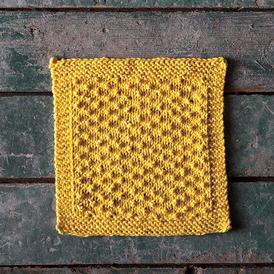
This weeks Free pattern is Mrs. Hunter's Dishcloth from KnitPicks.
Mrs Hunter's Dishcloth
FINISHED MEASUREMENTS 9x9”
NEEDLES US 7 (4.5 mm)

This sunny dishcloth is based on an easy Shetland lace pattern, named after a woman from one of the most prominent knitting families on the island and featured in Barbara G. Walker's indispensable book A Treasury of Knitting Patterns. The garter stitch border helps stabilize the lace. 

Mrs. Hunter's Pattern (worked flat) 
Row 1 (RS): Knit 
Row 2 (WS): Purl 
Row 3: *SL1, K3, psso the 3 knit sts; rep from * 
Row 4: *P3, YO; rep from * 

DIRECTIONS 
Cast on 42 stitches. Border Knit 9 rows in garter stitch (knit every row) Lace Pattern 
Row 1 (WS): K7, P28, K7 
Row 2 (RS): K7, *SL1, K3, psso the 3 knit sts; rep from * 7 times, K7 
Row 3: K7, *P3, YO; rep from * 7 times, K7 
Row 4: Knit all sts. 
Con't in established pattern until dishcloth measures approx 7 1/4 inches (19cm) from cast on edge. 
Finish with a K7, *P3, YO; rep from * 7 times, K7 row. 
Border Knit 9 rows in garter stitch. Bind off loosely knitwise. 

Finishing Weave in ends and block to finished measurements.

The Original Pattern can be found at http://www.knitpicks.com/patterns/Mrs_Hunters_Dishcloth__D55564220.html

Saturday, April 8, 2017

Baby - Science Proves You Can't Hold Your Baby Too Much

Science Proves You Can't Hold Your Baby Too Much


A new study shows that cuddling your baby (early and often!) has huge benefits when it comes to brain development, especially for preemies.
mom can't hold baby too muchmom can't hold baby too muchAnna Goroshnikova/Shutterstock
Good news for all of us with that one friend or family member who likes to scold us for "spoiling" our babies by holding them too often. According to a new study, you can't EVER cuddle your newborn too much. And in fact, touch is crucial to a baby's development and actually has some pretty major benefits when it comes to brain development.
Researchers at Nationwide Children's Hospital in Ohio observed 125 premature and full-term infants to see how they responded to gentle touch and here's what they found: Premature babies were more likely to have a reduced response to touch than the full-term babies. And the preemies who had more exposure to painful medical procedures were also more likely to have a reduced response to touch.
My daughter was a preemie, so this news initially made me sad. But get this: The premature babies who had an increased amount of gentle touch from their parents and/or NICU caregivers actually responded more strongly to gentle touch than the premature babies who weren't touched or held as often. So I guess all those hours I spent every day rocking my newborn baby girl in the chair next to her incubator paid off. Which, according to lead researcher Dr. Nathalie Maitre, is proof that gentle, supportive touch can actually help brain development.
Making sure that preterm babies receive positive, supportive touch such as skin-to-skin care by parents is essential to help their brains respond to gentle touch in ways similar to those of babies who experienced an entire pregnancy inside their mother's womb," she explained. "When parents cannot do this, hospitals may want to consider occupational and physical therapists to provide a carefully planned touch experience, sometimes missing from a hospital setting."
A great idea. And in fact, Dr. Maitre and her colleagues are now designing new ways to provide positive touch in the NICU. In the meantime, go ahead and cradle your baby to your heart's content. Because your touch matters, Mama—no matter what your annoying neighborhood buttinsky has to say about it.


I am not the author of this article. For the original and others like it please go tohttps://www.parents.com/baby/all-about-babies/science-proves-you-cant-hold-your-baby-too-much/

Thursday, April 6, 2017

Penny Pincher - Soap Ideas


You know what is just wonderful? DISH SOAP!
It has so many uses and it is definitely budget friendly. 


  • Getting grease stains off of clothing - Put a little dish soap on the spots and wash as normal. It can even work on stains that have been thru the dryer. 
  • Cleaning the blender - Add a little dish soap and water to the blender, blend for a few minuets, rinse well and you'll find that everything in the blades have been cleaned. 
  • Ice Pack - Fill a ziplock with dish soap, double bag it, and place in freezer. it will not be solid when frozen and it can bend with your body. 


Monday, April 3, 2017

Free Pattern of the Week!

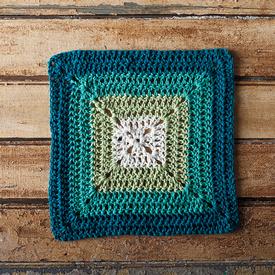
This weeks Free pattern is Teal Swirl Dishcloth from KnitPicks.
Teal Swirl Crochet Dishcloth
Finished Measurements 10.5” x 10”
Hook US J-10 (6.0mm) crochet hook


Directions 
Foundation Ring: Using Color A, ch 4 and join with slip st to form a ring 

Round 1: Ch 3 (counts as 1 dc), 2 dc into ring, ch2, [3 dc into ring, ch 2] twice, 3 dc into ring, join with hdc to top of beginning ch (counts as ch 2). 

Round 2: Ch 3 (counts as 1 dc) 1 dc into same ch sp,* 1 dc in each stitch across to corner ch sp, (2 dc**, ch 2, 2dc into ch sp; rep from * twice more, then from * to ** once more, join with hdc into the top of beginning ch (counts as ch2). Fasten off Color A. (28sts, 4 ch sps)

Rounds 3: Join Color B, repeat Round 2. 

Round 4: Repeat Round 2. fasten off Color B 

Rounds 5: Join Color C, repeat Round 2 

Round 6: Repeat Round 2. fasten off Color C 

Round 7: Join Color D, repeat Round 2 

Round 8: Repeat Round 2 to **, ch 2, join with slip st into top of beginning ch, fasten off Color D. 

Finishing Weave in ends, block if desired.

The Original Pattern can be found at http://www.knitpicks.com/patterns/Teal_Swirl_Crochet_Dishcloth__D55563220.html

Saturday, April 1, 2017

Baby - Your Guide to Tummy Time


Your Guide to Tummy Time
Babies spend so much time on their backs when they are sleeping that it is important to mix it up while Baby is awake in order to increase muscle strength and relieve boredom. Read on to learn the basics of tummy time.

baby lying on tummy with hands in mouth
Why Tummy Time?
Babies need time on their tummies to develop strong neck muscles which will help your baby accomplish all of her physical milestones like sitting, crawling, and walking. Your baby will naturally start trying to lift her head to see what is going on around her but she won't be able to hold her head up for long periods of time until she's around 3 or 4 months. Eventually your baby will use this position to roll over, scoot, and support herself with her arms.

When Should Tummy Time Start?
Tummy time should start the day Baby comes home from the hospital, according to the American Academy of Pediatrics (AAP). Only play with Baby on his stomach when he is awake and alert. When you are playing with him, make sure he is on a hard surface, such as the floor. A good time to play with your child in this position is after a diaper change or nap.

How Much Does Baby Need?
In the beginning, play with Baby on his tummy two to three times a day for about three to five minutes each session. As he gets stronger, gradually increase the length of time Baby spends on his stomach.

What if Baby Isn't Happy on His Tummy?
Baby may dislike playing on his stomach, but this should not discourage you from giving him some time on the floor. Try to keep him on the floor for three to five minutes but if he refuses, just do it for a minute or two and keep increasing his tummy time slowly. Make tummy time fun with rattle toys and plenty of face time with you. Eventually your baby will get used to being on his tummy and start to enjoy playtime in this position.

What Activities Can I Do with Baby?
To encourage Baby to lift her head, lie on your back with your child on your stomach. Place Baby on her stomach with her head facing yours. Then talk to her. Your baby will try to lift up her head to see your face.

Another fun activity is to place Baby's toys around her on the floor. Then help her reach for and play with the toys.

Tummy-Time Safety
When playing with your child in this position, make sure he is on a low, solid surface, so he doesn't risk rolling off of a couch or bed. Putting Baby on the floor on top of a blanket is the best bet for your child's safety. Also, if you have other children or pets, make sure your little one is safely out of harm's way.
Do not leave your baby alone while he is on his tummy as he could get into a position that is dangerous. Baby can get frustrated easily, so lay down on the floor with him and make silly faces or sing songs!
If your baby gets drowsy or falls asleep while on his tummy, switch him to his back for a nap. You should never let him sleep on his stomach because he could suffocate and it lessens the chance of SIDS.

I did not write this article. To find the original and more like it, please visit https://www.parents.com/baby/development/physical/tummy-time-guide/ 

Baby - 3 Ways to Get Your Baby to Eat Greens

3 Ways to Get Your Baby to Eat Greens

Your baby may be more open to broccoli and peas than you think. Make the most of his adventurous palate.

Green Plate of Avocado Broccoli Peas and Cucumber
Understand the science behind “yuck” 
Often it’s not the color of spinach or peas he’s reacting to but the bitter taste. It can take a baby up to 15 tastes to accept any new food, says Dyan Hes, M.D., a pediatrician in New York City. Mix a green bean puree with a sweet potato one; scramble spinach with eggs; or serve an avocado (a less-bitter green food) mashed up. Keep surprising them with new combinations, and don’t take the rejections personally.  

Hang in there

We know 15 tries is exhausting. But remember your loftier goal, says Dr. Hes: to create a pattern of foods your child will eat in the future. It’s okay to give your baby other foods she likes when you put a green one on her dinner plate, but don’t have a favorite one waiting in the wings. Your baby knows, “If I keep throwing broccoli I’ll get that yummy strawberry yogurt like last time!” 

Focus less on eating

Since your baby gets most of his calories from breast milk or formula until age 1, take the pressure off plate-cleaning. If he won’t eat bits of green beans, then change courses and just encourage him to grasp those pieces. Now you’re honing his fine motor skills, and that’s worth something—it’s what we call a parenting win! 

I am not the original writer of this article.


Original Article and More like it please go to https://www.fitpregnancy.com/baby/baby-feeding/3-ways-to-get-your-baby-to-eat-greens

Thursday, March 30, 2017

Supercook Website


This Website is amazing!

You just tell them the ingredients that you have at your house and it gives you recipes that only uses those ingredients! It is wonderful because it doesn't show recipes that need other ingredients that you don't have. No more running to the store for one thing or substituting random foods and wishing for the best.


* I am not getting any profit from the website. 


Monday, March 27, 2017

Free Pattern of the Week!

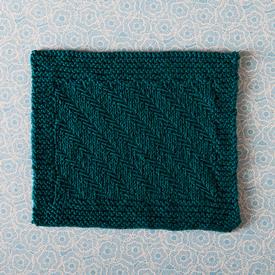
This weeks Free pattern is Fishbones Dishcloth from KnitPicks.
Fishbones Dishcloth Pattern
Finished Measurements 9.5x9”
Needles US 7 (4.5mm) straight or circular needles, or size to obtain gauge

Notes: The Fishbone dishcloth uses a very simple slipped stitch pattern to create a nice visual effect. It is very easy and is a good choice for beginner knitters or for knitters trying a slipped stitch pattern for the first time. The high relief textures makes for a very useful dishcloth. 

Garter stitch All rows: knit. 

Diagonal Herringbone pattern (worked flat, over a multiple of 6 sts) 
Row 1 and all odd numbered rows (WS): purl. 
Row 2: *sl3, K3; repeat from *. 
Row 4: K1, *sl3, K3; repeat from *, end sl3, K2. 
Row 6: K2, *sl3, K3; repeat from *, end sl3, K1. 
Row 8: *K3, sl3; repeat from *. Row 10: sl1, *K3, sl3; repeat from *, end K3, sl2. 
Row 12: sl2, *K3, sl3; repeat from *, end K3, sl1. 

Directions 
Cast on 46 sts. 
Work 10 rows in garter stitch 
Row 1 and all odd numbered rows (WS): K5 p to last 5 sts, K5. 
Row 2: K5, *sl3, K3; repeat from * 6 times, K5. 
Row 4: K5, K1, *sl3, K3; repeat from * 5 times, sl3, K2, K5. 
Row 6: K5, K2, *sl3, K3; repeat from * 5 times, sl3, K1, K5. 
Row 8: K5, *K3, sl3; repeat from * 6 times, K5. 
Row 10: K5, sl1, *K3, sl3; repeat from * 5 times, K3, sl2, K5. 
Row 12: K5, sl2, *K3, sl3; repeat from * 5 times, K3, sl1, K5. 

Repeat rows 1-12 another 3 times. 
Work 10 rows in garter stitch. Bind off. 

Finishing Weave in ends, wash and block gently. 

The Original Pattern can be found at
http://www.knitpicks.com/patterns/Fishbones_Dishcloth_Pattern__D55818220.html

Monday, March 20, 2017

Free Pattern of the Week!

This weeks Free pattern is Citrine Washcloth from KnitPicks.
Citrine Washcloth


Notes: Perky little nubbins in nice, orderly rows give this pattern just the right amount of texture to get the job done. The bumps are easy to make without any decreases or increases necessary, just clever little “chains” of knit stitches that pucker forward on the following row. 

Directions CO 35 sts. 

Row 1 (RS): K4, pm, k27, pm, k4 
Rows 2-8: K all stitches Stitch Pattern 
Row 9: k4, sm, *k3, (knit next stitch, (slip the stitch just knitted back onto left needle and knit it again through back loop) 3 times). Repeat from * across to marker, sm, k4. 
Row 10: k4, sm, purl to second marker, sm, k4. 
Row 11: k4, sm, *k1, (knit next stitch, (slip the stitch just knitted back onto left needle and knit it again through back loop) 3 times), k3. Repeat from * across ending with a k1 before the second marker, sm, k4. 
Row 12: k4, sm, purl to second marker, sm, k4. 

Repeat rows 9-12 ten more times, ending with a row 12. Work 7 rows in garter stitch. BO all stitches loosely. 

Finishing -  Weave in all ends and block to measurements. 


The Original Pattern can be found at http://www.knitpicks.com/patterns/Citrine_Washcloth__D55562220.html

Thursday, March 16, 2017

Homemade Powder Laundry Detergent

Here is my favorite recipe for Laundry Detergent. I know that this recipe is not all natural but it is more natural than most detergents and still get the grease out of my man's mechanic uniform. I got the recipe out of The Naturally Clean Home

My recipe:
- 4 lb 12oz Borax
- 3 bars of Zote or Fels-Naptha Soap, Grated (You can now purchase this pre-grated)
- 4 lb of Baking Soda (Is your baking soda fresh?)
- 55oz of Arm and Hammer Super Washing Soda
- 4 lb Oxy Clean

Just mix well (I purchased a nice Glass Container to put it in)

I also have cut back on using Bleach for anything. It has toxins that can hurt my dogs if they got into it. So now I am using White Vinegar. It works just as well and I'm not worried if the dogs get near it.

Monday, March 13, 2017

Free Pattern of the Week!

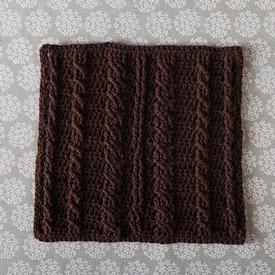
This weeks Free pattern is Cabled Spa Cloth from KnitPicks.
Cabled Spa Cloth
Finished Measurements 10” Square, blocked 
Hooks US G/6 (4mm)

Special Stitches 
FPdc -Front post double crochet YO, place your hook in front of your work and then push the hook behind then to the front of the designated stitch, YO and pull up a loop, YO and pull through 2 loops on hook, YO and pull through last 2 loops on hook. 
BPdc -Back post double crochet Place your hook behind your work and then push the hook to the front then behind the designated stitch, YO and pull up a loop, YO and pull through 2 loops on hook, YO and pull through last 2 loops on hook. 
FPtr - Front post triple crochet YO twice, place your hook in front of your work and then push the hook behind then to the front of the designated stitch, YO and pull up a loop, (YO and pull through 2 loops on hook) twice, YO and pull through last 2 loops on hook. 

Directions 
Row 1: Ch 42, turn. 
Row 2: Dc in fourth ch from hook and in each ch across – 40 dc 
Row 3: ch 2, turn, Hdc in first dc, BPdc around next 2 dc, hdc in next 3 dc, BPdc around next 3 dc, hdc in next 4 dc, BPdc around next 4 dc, hdc in next 2 dc, BPdc around next 2 dc, hdc in next 2 dc, BPdc around next 4 dc, hdc in next 4 dc, BPdc around next 3 dc, hdc in next 3 dc, BPdc around next 2dc, hdc in last st. 
Row 4: ch 2, turn, hdc in first hdc, sk next BPdc, FPdc around next BPdc and the skipped BPdc, hdc in next 3 hdc, sk next BPdc, FPdc around next 2 BPdc, FPtr around skipped BPdc, hdc in next 4 hdc, sk next 2 BPdc, FPtr around next 2 BPdc then around skipped BPdc, hdc in next 2 hdc, FPdc around next 2 BPdc, hdc in next 2 hdc, sk next 2 BPdc, FPtr around next 2 BPdc then around skipped BPdc, hdc in next 4 hdc, FPdc around next 2 BPdc, FPtr around skipped BPdc, hdc in next 3 hdc, FPdc around next BPdc and the skipped BPdc, hdc in last hdc, 
Row 5: ch 2, turn, hdc in first hdc, BPdc around next 2 FPdc, hdc in next 3 hdc, BPdc around next FPtr and around next 2 FPdc, hdc in next 4 hdc, BPdc around next 4 FPtr, hdc in next 2 hdc, BPdc around next 2 FPdc, hdc in next 2 hdc, BPdc around next 4 FPtr, hdc in next 4 hdc, BPdc around next FPtr and next 2 FPdc, hdc in next 3 hdc, BPdc around next 2 FPdc, hdc in last hdc.

Repeat rows 4 and 5 until cloth measures about 9 inches long, finishing with a row 5. 

Finishing Ch 1, do not turn, 2 sc in last st, evenly space 38 sc along edge, (3 sc in next corner, evenly space 38 sc along next edge) repeat 3 times, join with sl st to first sc. Fasten off and weave in ends, wash and block to diagram.  


The Original Pattern can be found at http://www.knitpicks.com/patterns/Cabled_Spa_Cloth__D55821220.html

Thursday, March 9, 2017

Backpacking Tips for Beginners


Backpacking Tips for Beginners

Being an Outdoor Guide means that everyone asks you questions. Here are some tips and tricks that you can use!


Pick an Experienced Backpacking Partner
Team up with an experienced friend. Knowledgeable company is good for peace of mind, and a shared backpacking experience is usually more fun than going solo. A been-there/done-that companion(s) can accelerate your learning curve by sharing wisdom gained in the field.
Join a group. Group trips (4–6 people, typically) are memory-makers. Most backcountry areas limit groups to 12 (to minimize impact to the land).
Pick an Appropriate Backpacking Destination
You’ll want to consider such factors as your trip’s length and difficulty, as well as any special considerations (hiking with dogs or kids) or interests (wildflowers, waterfalls, history, etc.).
Trip Distance
A one-night trip makes sense for beginners. Keep the round-trip distance to 10 miles or less. It is reassuring to know that civilization is not too far out of reach.
Got two nights? Consider this: Set up camp on the first night, use the next day to relax or take a day hike to somewhere nice, then return to your base camp that night. This way you’ll tote a full backpack on just two days.
Trip information
There are several good sources of trip information.
Guidebooks: Some authors rate trips for scenic quality—very helpful for picking a prime trail. Their 5-star locales usually attract crowds, so don’t expect solitude unless you visit midweek.
Websites, magazines: Hiking websites abound and can be good resources, though reliability can vary. Magazines are solid sources, and some national parks and forests maintain online trail-condition reports, too.
Well-traveled friends. They can point you to destinations that match your tastes and abilities.
Park services: You may be able to find information from park rangers or park websites in the area you're interested in exploring.
Choose Your Backpacking Gear
The 10 Essentials: It’s a time-tested assortment of wilderness travel gear that ensures you have the basics for safety and comfort and equips you to handle emergencies. You may never refer to your compass or use firestarter—two of the Essentials—but it’s good to carry them, just in case.
Not really roughing it. Many comforts of home also come in impressively lightweight backpacking forms: stoves, cushy sleeping pads, camp pillows.
Think light. It's easy to over-pack. Yes, bring a camera, toilet paper, headlamp and sunscreen. But maybe skip the lantern, the paperback and that third water bottle (bring a water filter instead and resupply as you go). Aim for a pack weight that’s manageable. Say, around 30 pounds.
Borrow or rent. Try out big-ticket items (bags, tents) before making a purchase so you better understand your preferences.
How to Choose and Pack a Backpack
Here are some brief guidelines:
Capacity. The number in pack names refers to the pack’s volume in liters. A common size for weekend trips (1–3 nights) is 35–50 liters. Multiday trips (3–5 nights) require packs of 50–80 liters. For longer trips, or if you’re toting a lot of winter or kids’ gear, choose 70 and higher.
Size: Backpacks are sized according to torso length, not a person’s height. If that’s not practical, you can get a friend to measure your torso length, determined by measuring the distance between the top of your hips to your C7 vertebrae—that bony protrusion near the base of your neck. 
Loading and adjusting a pack. A backpack is designed to carry most of the load on your hips while your shoulders carry less. Keep heavy gear close to your back and near your shoulders.
Backpacking Clothing
Base layer. Sweaty cotton takes forever to dry, so choose a “technical” fabric, such as moisture-wicking polyester or wool, for your underwear and long underwear.
Pants or shorts. Convertible pants are popular. Their lower-leg portions can zip off if you want more air and sun.
Footwear. Full- or mid-cut boots are traditional backpacking choices, though some folks prefer hiking shoes or even trail runners. Tennis shoes and urban/athletic footwear are too flexible for roots and rocks on trails. Sandals for lounging in camp are a nice luxury if you don’t mind toting the weight.
Socks. Avoid cotton. Wearing cotton on the trail is asking for blisters. Choose wool or synthetic hiking socks in a weight or thickness compatible with your footwear.
Head cover. Brimmed hats, caps, Buffs, bandanas—it’s smart to shield your scalp from all-day sun exposure. Bring ample sunscreen for exposed skin.
Outerwear. Even if dry weather is forecast, a rain jacket keeps bugs off your arms and torso while in camp. An insulation layer (jacket or vest) wards off chills early or late in the day.
Food and Food Storage
Dinner. For simplicity, choose freeze-dried food that requires just a few cups of boiling water and 10 minutes of wait time. Gourmands or those with access to a food dehydrator can make more creative trail meals.
Rest of the day. Some backpackers take time to cook breakfast; others save time with ready-to-eat items. Lunch can be a meal or several breaks for snacks such as trail mix, jerky, dried fruit, chunks of cheese and energy foods (bars, chews and gels).
Coffee. Lightweight French coffee presses do, in fact, exist.
Food storage. Never leave food lying around unattended. You’ll likely lose it, and animals become less inclined to forage in a natural manner again. Carry a food canister or learn how to hang food to protect your edibles (and any aromatic items) from critters.
Backpacking with Kids
Adjust your expectations. You’ll travel slower and over shorter distances, but done right (with compassion and patience) you can cultivate a love for outdoors adventure in your little ones.
Teach respect for the land. Encourage kids to stay on trails and not cut switchbacks. Ask them not to pick flowers, tag rocks or carve their names into tree trunks.
Communication and Electronics for Backpacking
Do not count on getting cell phone reception in wilderness areas. Cell towers can be found near visitor centers at a handful of national parks, but in the backcountry, cell reception is rare.
Other communication options include satellite phones (pricey, but your best bet if on-demand access to civilization is a must),satellite messengers (capable of transmitting 1-way or even 2-way text messages), 2-way radios (best for groups spread out over a large area; average range is 2 miles) and personal locator beacons (for sending a distress signal).
Portable power sources (such as solar chargers) can generate enough energy to fully charge a smartphone.
Before You Go
Practice at home or a campground. Pitch your tent in your backyard. Inflate your sleeping pad. Light your stove. Check out your headlamp. Know how things work in a comfortable place before you’re under pressure in an unfamiliar setting.
Call ahead. Avoid surprises. Contact a ranger office at or near your destination. Ask about road closures, trail conditions, permit requirements, animal activity or any temporary restrictions.
Share your plans with a friend. Leave an itinerary with a friend who will remain in town. If you don’t return by the appointed time, your friend can notify rangers that you may need help.
If You Get Lost
Remember an acronym favored by the Emergency Response Institute of Olympia, Wash.: S-T-O-P. Stop, Think, Observe and Plan.
Stop: If you feel uncomfortable with your situation, don't go any farther. Don't panic, either. The rule changes if the area is unsafe or someone in your group needs medical attention. Count to 10, drink some water or eat a little food. These acts often give you a fresh perspective and help you better assess your situation.
Think: Where were you when you were last certain of your location? Can you navigate back to that point? Can you hear or see helpful landmarks like a road or trail? If so, carefully return to that spot and reevaluate your options.
Observe: Put your senses on full alert. Picture in your mind all distinctive features you spotted as you came to your current position. Can you use them as waypoints to guide you back to a place where you were confident of your location? If so, return to that spot. Can you connect with a known trail from that point? Do so. If not, stay put. It's easier for rescuers to find you near your original line of travel.
Plan: If you are with others, talk over a plan. If not, it can be useful to say the plan out loud as if you were explaining it to someone else. If it makes sense, then follow your plan. If not, revise your plan. If the situation changes as you follow that plan, use "STOP" again to improve your chances for a safe recovery.
Wilderness Ethics
"Pack out what you pack in." It’s an old phrase but still valid, along with “Take only pictures, leave only footprints.” In the wilderness, no one cleans up after you. So be relentlessly tidy. Pick up every wrapper, tote out every orange peel. Any item that does not originate in the wilderness, even an apple core, should not be left there. In some backcountry areas, that includes toilet paper. Learn about Leave No Trace principles so wilderness scenery perpetually looks untouched and inviting, just the way you want to see it. 
Understand the backcountry is wild and unpredictable, not a theme park. In the wilderness, you’ll find no handrails, no courtesy phones, no attendants, no flush toilets, no water fountains, no snack bars. It’s a potentially dangerous place. That’s part of its appeal—wild lands are a different world. Self-reliance is a vital skill for appreciating them. Be aware that you’ll need to adapt to the unexpected.
This ain’t no disco. Realize most people head to the wilderness for peace and serenity—an escape from the noisy urban norm. Have fun; just please self-regulate your noise level.
Ultimately, relax and enjoy. Stay committed to being nice to fellow backpackers, the animals and the land. Breathe deeply, soak in the views and immerse yourself in a whole new world.

Article and others like it found at REI.com

Monday, March 6, 2017

Free Pattern of the Week!

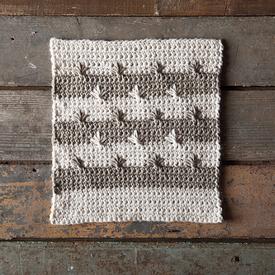
This weeks Free pattern is Etoile Dishcloth from KnitPicks.

Etoile Crochet Dishcloth

Star Stitch
For this stitch, you will be picking up 5 loops by inserting your hook as follows: 2 sts to right of next stitch and 1 row down, 1 st to right of next stitch and 2 rows down, directly below next st and three rows down, 1 st to left of next st and 2 down, 2 sts to left of next st and 1 row down. There will be 6 loops on your hook. Now insert your hook into the top of the next stitch, yarn over, draw loop through, yarn over and then draw through all 7 sts on hook.

Directions

Loosely chain 36 stitches.

Skip 1 ch and work sc into next 35 sts. Repeat for 9 more rows (10 rows of sc total). Break MC leaving a 6-8” tail, switch to CC1.

Star Stitch Stripe 1:

Work 5 sts in sc, *work star stitch, work 7 sts in sc* repeat 2 more times, work star stitch, work last 5 sts in sc.

Work 5 rows in sc. Break CC1 leaving a 6-8” tail, switch to MC. ch chain CC contrast color MC main color sc single crochet sts stitches Abbreviations

Star Stitch Stripe 2:

Work 9 sts in sc, *work star stitch, work 7 sts in sc* repeat one more time, work star stitch, work last 9 sts in sc.

Work 5 rows in sc. Break MC leaving a 6-8” tail, switch to CC1.

Continue stripe sequence as follows: Star Stitch Stripe 1 (CC1), Star Stitch Stripe 2 (MC), Star Stitch Stripe 1 (CC1).

With MC, work across row in sc. Repeat for 9 more rows (10 rows of sc total).

Finishing Weave in ends, wash and block to size


The Original Pattern can be found at http://www.knitpicks.com/patterns/Etoile_Crochet_Dishcloth__D55561220.html

Thursday, March 2, 2017

Paper Towels (Where to go)

I live in a wonderful rental home. It has a lot of room for almost everything... Except somewhere to place my paper towels.

I was at Harbor Freight with Kody and came up with a amazing idea. To magnet the paper towels to the fridge!

It is pretty simple. All you have to do is purchase a Magnetic Paper Towel Holder. I go mine at Harbor Freight for less than $10.